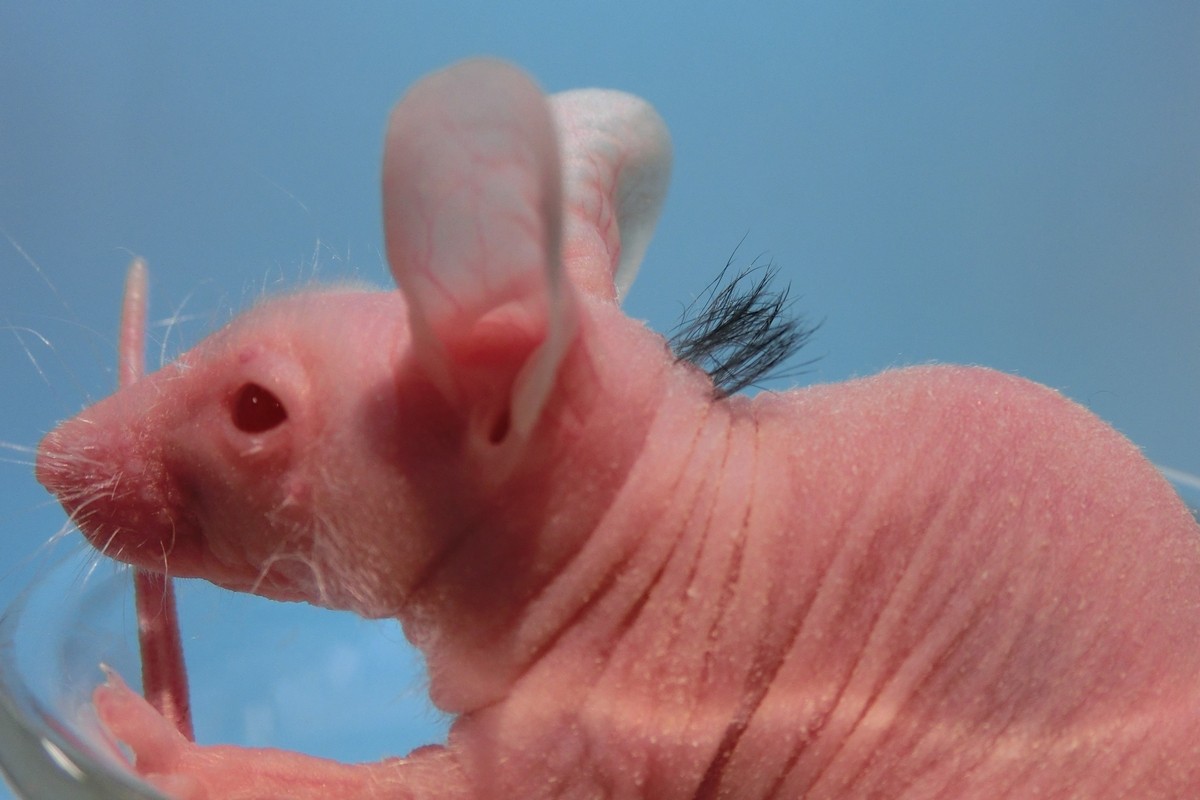
Tsuji told you this, or someone else at RIKEN? I would have thought they'd do at least one full scalp procedure in phase I to show off. They should all be full scalp procedures. Preclinical would be just a one cm spot, then the clinical trials should be exactly what they are going to do in the clinic, otherwise it's not a true test.Yes but that's not what they'll be doing for a phase 1 safety test & proof of human concept test, otherwise that's exactly what I just said. The phase 1 test is going to be patches of hair on bald scalp, similar to the Stemson or Tsuji mice pictures. Would pictures of 10 follicles in one spot after 90 days encourage you to drop 750k if you knew nothing else about the science?

You are using an out of date browser. It may not display this or other websites correctly.
You should upgrade or use an alternative browser.
You should upgrade or use an alternative browser.
Update From The God Himself - Dr. Takashi Tsuji
- Thread starter kingjohn
- Start date
Before doing a phase I they do a smaller safety test in humans. This will be where they test 1cm².Make no sense to goo ful head of hair on first try.
So many thing could go wrong . They should do at first 1 square cm then see that there no weird reaction and the hair come out in normal direction and there is no ingrown hair which would be horrible .. they need to do baby step when its come to human . Until they prefect it .
"Phase 0 involves exploratory, first-in-human (FIH) trials that are run according to FDA guidelines. Also called human microdose studies, they have single sub-therapeutic doses given to 10 to 15 subjects and yield pharmacokinetic data or help with imaging specific targets without introducing pharmacological effects. Pharmaceutical companies perform Phase 0 studies to decide which of their drug candidates has the best pharmacokinetic parameters in humans."
The phases of preclinical and clinical trials
While Profil Germany focuses on phase 1+2 clinical trials, a full understanding of the phases of clinical trials is essential.
 www.profil.com
Sometimes in phase 1 they literally give people a single dose of a medication. For BAY & Kintor's KX they dosed the back/abdomen of patients with a single doage, no where near the scalp or hair for either one. I would be very surprised if phase 1 was anything more then a patch of hair.Before doing a phase I they do a smaller safety test in humans. This will be where they test 1cm².
"Phase 0 involves exploratory, first-in-human (FIH) trials that are run according to FDA guidelines. Also called human microdose studies, they have single sub-therapeutic doses given to 10 to 15 subjects and yield pharmacokinetic data or help with imaging specific targets without introducing pharmacological effects. Pharmaceutical companies perform Phase 0 studies to decide which of their drug candidates has the best pharmacokinetic parameters in humans."
The phases of preclinical and clinical trials
While Profil Germany focuses on phase 1+2 clinical trials, a full understanding of the phases of clinical trials is essential.
Maybe, maybe not. Nobody here is going to be getting it regardlessSometimes in phase 1 they literally give people a single dose of a medication. For BAY & Kintor's KX they dosed the back/abdomen of patients with a single doage, no where near the scalp or hair for either one. I would be very surprised if phase 1 was anything more then a patch of hair.
Doesn't matter to me, proof of concept is all it takes to get the ball rolling.Maybe, maybe not. Nobody here is going to be getting it regardless

- Reaction score
- 1,104
They keep posting.
our brother
They keep posting.
 )))
They keep posting.
There are various types of human hair shafts, which play a role in protection from the outside world, perception, and social communication. The basic structure of the hair follicles that create each hair shaft is the same. The fate of this hair type is determined by the fetal body plan and is remembered by the dermal papilla. Planting hair follicles elsewhere does not change the fate of the hair species.
In other words, moving an occipital hair to the top of the scalp doesn't change the fact that it's resistant to miniaturization.
- Reaction score
- 1,104
So they pretty much know by their own research that hair restoration with multiplication will clear Androgenetic Alopecia out!? That's satisfying and terrifying at the same time... Cool!In other words, moving an occipital hair to the top of the scalp doesn't change the fact that it's resistant to miniaturization.

- Reaction score
- 135
Wait what do you mean clear Androgenetic Alopeicia out, I'm confused lolSo they pretty much know by their own research that hair restoration with multiplication will clear Androgenetic Alopecia out!? That's satisfying and terrifying at the same time... Cool!
- Reaction score
- 107
How is it terrifying?So they pretty much know by their own research that hair restoration with multiplication will clear Androgenetic Alopecia out!? That's satisfying and terrifying at the same time... Cool!
Baldness is terrifying lol, not the cure to baldness
That's probably because they are being taken from areas where the person was already prone to miniaturization (ie the NW5-6 zone) and then get blasted by scalp DHT plus shock damage on move. Even with FUT, I see strip scars in the NW6 zone on the sides all the time.There plenty of evidence that even the the hairs from the donor zone thinned in a matter of 2-3 years after the transplant . A time period that way faster to thinned rather then if it would never been extract from donor zone.
Last edited:
Hang around the transplant world for long enough and you hear plenty of those reports. Transplanted hairs thinning and donor area thinning. It's not a consistent thing but it definitely happens. Severe baldness takes no prisoners. The "safe zone" is not 100% safe, it's just being hurt less severely.
Some guys even report their transplanted hairs thinning faster than the rest of the donor hair it came from. It's not unheard-of.
The guys who got early plug grafts (like 4mm chunks) used to report a "donuting" problem where the center of the grafts would bald out compared to the perimeter. I don't think that has ever been explained very well. Just catch-all explanations like "reduced circulation due to scarring". IMO the phenomenon seemed too specific for that to cover it.
Then they have dupa/retrograde or another type of hair loss that extends to the new follicles like a scarring alopecia that was never treated. This isn't a one size fits all.Nope im taking about the safe one the real donor zone.

- Reaction score
- 521
I did my part by donating to riken.
- Reaction score
- 135
You are like a breath of fresh airThis thread just did its third anniversary and nobody noticed...soon it will be five years old hehe
Dr. Tsuji is planning to put hair regeneration in clinical practise around 2026.
This is his last interview done 2 weeks ago for japanese newspaper:
 globe.asahi.com
Like I understand he is creating new management team (probably new company) and they will looking for investments to start clinical trials.
This is his last interview done 2 weeks ago for japanese newspaper:
再生医療技術を活用、理研チームの「髪のタネ」量産計画は悩み解消の決定打になるか:朝日新聞GLOBE+
古今東西、多くの人々が年齢とともに減っていく髪の毛に心を痛めてきました。かつらは借り物だし、最近はやりの自家植毛もいわば「髪の毛の引っ越し」なので、髪の総本数は増えません。いっそ「髪のタネ」の大量生産で、髪不足の一気解決を狙おう―ー。...
Like I understand he is creating new management team (probably new company) and they will looking for investments to start clinical trials.
- Reaction score
- 179
from the article:
I think people went totally retarded on this forum about tsuji and pointing him as this villain who is a fraud trying to deceive people when in reality he is reputable researcher at one of the top institutes in the world and foremost a scientist and not a business man. people always go become super weird here attacking researchers, finding out their phone numbers and calling them actually expecting a reply(who would lets be real do that in any other setting?) same with stemson. additionally, he is working on other aspects of regenerative medicine on the side of this like tooth regeneration and skins/other organs etc if you look at his publishing record.
furthermore, he is absolutely right about the fact that it is difficult to receive so much funding for a condition that is not life threatening. 2020 was the year covid hit so his explanation for why things went down and not according to plan makes sense and is justifiable.
I mean it says it right there, they actually went the way and applied for trials and organ technologies failed them and it was hard to burden. I hope they can get the funding, still think tsujis approach is easier to implement then stemson with current technological possibilities and especially easier to role out for mass production as long as IPSC mass manufacturing has not been figured out
In June 2020, we also obtained the necessary approval for clinical studies. We are finally at the stage. However, an unexpected pitfall awaited here.
The venture company Organ Technologies, which was supposed to mass-produce and supply the "seeds" of hair follicles, failed to raise 2 billion yen in funding and was forced to suspend operations.
If it becomes a legal arrangement as it is, patents will be lost. So Mr. Tsuji took over the debt of Organ Corporation and completed the private liquidation.
Now, we are drawing up a blueprint to assemble a new management team, raise funds, conduct clinical research, and start free medical care using “seeds” from fiscal 2026.
“Clinical research for practical application requires the most money. Failure to raise funds is a direct hit from the corona crisis, but regenerative medicine for hair and teeth is not a life-threatening treatment in the first place, so clinical research In that case, it hurts that there is no public research funding.Actually, there is a high possibility that it will be the starting point for regenerative medicine research on various organs,” laments Mr. Tsuji.
I think people went totally retarded on this forum about tsuji and pointing him as this villain who is a fraud trying to deceive people when in reality he is reputable researcher at one of the top institutes in the world and foremost a scientist and not a business man. people always go become super weird here attacking researchers, finding out their phone numbers and calling them actually expecting a reply(who would lets be real do that in any other setting?) same with stemson. additionally, he is working on other aspects of regenerative medicine on the side of this like tooth regeneration and skins/other organs etc if you look at his publishing record.
furthermore, he is absolutely right about the fact that it is difficult to receive so much funding for a condition that is not life threatening. 2020 was the year covid hit so his explanation for why things went down and not according to plan makes sense and is justifiable.
I mean it says it right there, they actually went the way and applied for trials and organ technologies failed them and it was hard to burden. I hope they can get the funding, still think tsujis approach is easier to implement then stemson with current technological possibilities and especially easier to role out for mass production as long as IPSC mass manufacturing has not been figured out