I have been using Rogaine for 3 months now and have seen a lot of posts saying that using Rogaine without Propecia is useless because you are not stopping the root cause of hairloss - DHT.
Is this true?
Is there anyone out there that has used Rogaine without Propecia and experienced regrowth?
Thanks,
FMG
"the root cause of hairloss" LOL
This is a myth perpetuated by certain internet phantoms like Mr. Bryan the Baldy and others. They have never used the stuff on their own and spread misinformation based on several graphs taken out of context.
The answer is simple: Does minoxidil regrow hair? It does. So it interferes with the process of balding (although we don't know the exact mechanism). DHT stands at the root of the problem, but it only starts a chain of reactions leading to the follicle's destruction. Each part of this chain can be addressed separately and the process can be stopped or even reversed. Well, minoxidil works differently than 5-AR blockers, but it works! And remember: Although 5% minoxidil is certainly weaker than 5-AR blockers, we don't have any studies on the effiacy of 10% or 15% minoxidil. The 5% version is outdated and apparently suboptimal for many people (but nobody cares).
You can look at this graph from Olssen et al. (1990), the last long-term (2+ years) study on minoxidil that I am aware of:
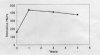
The hair regrowth reached its peak after 1 year and then the haircounts started to decline. This is often misinterpreted by some internet fools, who claim that minoxidil works for only 2 years. However, remember that
the people are still above baseline. In fact, if we projected the curve into the future, it would touch the baseline after ca. 15 years. Yes, at least 15 years of maintenance! And this was on
3% minoxidil!
Further, the decline may not mean a worsening of the overall state of hair. Many hairs stimulated by minoxidil simply entered the growth phase at the same time and in the following years, their hair cycles desynchronize and hence the desinty decreases a bit. This happens in finasteride users as well. Furthermore, considering that in every group of people, you have responders and non-responders, the curve would have to decrease after 2 years anyway, even if 90% well-responding people maintained hair perfectly. It tells nothing about individual response and I wonder, why the authors of such studies still use such a deceptive tool. You can see this problem on the following graph from the same study:
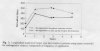
The authors divided the patients into two groups. One group used minoxidil twice a day, the second one switched to once-daily use after 1 year. The group using minoxidil once-daily experienced a decrease in haircounts after 3 years, but then returned back to the twice-daily usage and
stabilized.
As the authors add, one-third (9 out of all 31 patients followed for 5 years) experienced continuous regrowth even after 5 years. Apparently, these patients were mostly in the second group. Thus, the curves suddenly look differently, when you divide patients according to response. There are no general rules as for minoxidil efficiacy; there are very large individual differences. 5% minoxidil is on average weaker than 5-AR blockers, but it still can serve well to many people. In fact, you can find guys using this stuff successfully for 20-25 years. I have been on it for 16,5 years.
Unfortunately, many internet reports about the "loss of efficiacy after few years" come from stupid and lazy people, who stopped using it regularly. I observe it on internet forums quite often. They interrupt its use for several weeks or even months, and think that this is normal. It is not. Their hair won't be kept in the place by any magic. It will start to fall out very quickly. The use of minoxidil is a life-long commitment and requires discipline that only few people possess. The study of Olssen et al. began with 126 men, after all. After 5 years, only 31 remained. And as the authors add, the drop-outs had similar results after 1 year. But they didn't have enough patience.
A final note: The addition of 5-AR blockers to minoxidil will improve results markedly, as these pictures show:
http://www.bernsteinmedical.com/medical-treatment/patient-photos/
So I would certainly recommend you to add a 5-AR blocker, if you want to improve your situation.