Newly discovered factor in Androgenetic Alopecia: Mechanical Stress.

Digidako

Established Member
My Regimen
Reaction score
29
In lay terms, the authors suggest the binding of the AR within the hair follicle alters tissue networks and actually causes a detrimental build up of collagen. This buildup results in the obstruction of the hair canal and inevitably perifollicular fibrosis.
-------------
-->
It is not news that fibroses plays a large role in Androgenetic Alopecia, but now we have some mechanisms to work with
-------------
They continue to suggest that Transforming growth factor B-1 (TGFB-1) ((AGAIN NOT NEWS)) PLAYS A FUNDEMENTAL ROLE IN Androgenetic Alopecia. TGFB-1 is directly induced by androgens in balding DP cells.
--------------

I'm aware that the idea of TGFB-1 is not news to most of us, but this research suggests that it is one of the primary players when it comes to ruining our beautiful hair follicles.

- - - Updated - - -
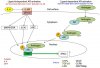
TGFB1.jpg

I have provided a photo showing exactly what I believe is going on

Using a TGF-B1 inhibitor on its own may or may not be a viable option for treatment, seeing as there are multiple factors that AR gene regulation is responsible for. VEGF for example is highly expressed in the hair follicle during early anagen, but DHT interaction of the AR has been shown to inhibit some of the activity of VEGF, which in my opinion might explain why balding hair cells have trouble achieving and remaining in anagen phase. This could also explain why anti androgens/5AR inhibitors work to stabilize hair loss, but show low efficacy in promoting new hair growth.

Another interesting player here is IL-6, which appears capable of activating androgen receptor genes in the absence of any androgens. This may explain why some of us still experience hair loss, albeit taking/using AA's and 5AR's. (see: http://www.nature.com/jid/journal/v132/n1/full/jid2011274a.html)

--------

Regrading CCRK
( http://dataspace.princeton.edu/jspui/handle/88435/dsp01qf85nb32t) Suggests that CCRK (another products of androgen gene transcription) "is a novel regulator of shh signalling" and "Ccrk function is required for maximal activation of Shh signalling". ---> To me, this suggests that AR interaction with DHT must down-regulate CCRK (seeing as shh is potential target for the treatment of hair growth via stem cell neogenesis)
 
Top