- Reaction score
- 1
For years, I thought all hair transplants worked the same way.
Like many people dealing with hair loss, I spent countless evenings reading forums, watching YouTube videos, comparing clinics, and trying to understand the differences between FUT and FUE.
The more I learned, the more one thing became obvious:
Traditional hair transplantation is still based on moving a limited number of hair follicles from one area of your scalp to another.
Whether it's FUT or FUE, you're still relying on the same donor supply.
That realization made me wonder...
What happens years later if hair loss continues?
What if I need another procedure?
Is there another approach?
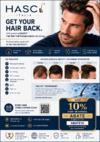
That's when I discovered the HST (Hair Stem Cell Transplantation) method offered by HASCI.
Instead of removing an entire follicle, HST is designed to partially extract a single hair follicle while preserving regenerative cells in the donor area. According to HASCI, the remaining part can regenerate in the donor site while the transplanted part develops into a new follicle in the recipient area.
That philosophy immediately made sense to me.
Rather than simply relocating hair, the goal is to preserve the donor area as much as possible while restoring density where it's needed.
That was the biggest difference for me.
After months of research, I decided to become an Ambassador for this method.
Not because someone asked me to.
Not because I believe in miracle cures.
But because I genuinely believe more people deserve to know that this technology exists before deciding on a traditional procedure.
Hair loss isn't just about appearance.
It affects confidence.
Relationships.
Photos.
Work.
Social life.
Sometimes even the way you see yourself every morning in the mirror.
If you're reading this because you're losing your hair, I want you to know something.
Don't give up.
Take your time.
Research every option carefully.
Ask difficult questions.
Choose the treatment that feels right for you.
For me, HST stood out because it approaches hair restoration from a different perspective—one focused on preserving the donor area for the long term.
As an Ambassador, I'm also able to offer my personal referral code:
ABATE10
which gives you 10% OFF your treatment if you decide to go ahead.
If you do use my code, I'd really appreciate hearing from you.
Let me know that you received the discount.
And after your treatment, I'd love to hear about your experience—whether it exceeded your expectations or whether there were things you think future patients should know.
I'm not here just to share a referral code.
I'm here because I want to build a community where people can exchange honest experiences, ask questions without embarrassment, and support each other.
Hair loss can make you feel isolated.
It doesn't have to stay that way.
If my research and my experience can help even one person make a more informed decision, then becoming an Ambassador will have been worth it.
Feel free to reach out anytime.
You're not alone.
Like many people dealing with hair loss, I spent countless evenings reading forums, watching YouTube videos, comparing clinics, and trying to understand the differences between FUT and FUE.
The more I learned, the more one thing became obvious:
Traditional hair transplantation is still based on moving a limited number of hair follicles from one area of your scalp to another.
Whether it's FUT or FUE, you're still relying on the same donor supply.
That realization made me wonder...
What happens years later if hair loss continues?
What if I need another procedure?
Is there another approach?
That's when I discovered the HST (Hair Stem Cell Transplantation) method offered by HASCI.
Instead of removing an entire follicle, HST is designed to partially extract a single hair follicle while preserving regenerative cells in the donor area. According to HASCI, the remaining part can regenerate in the donor site while the transplanted part develops into a new follicle in the recipient area.
That philosophy immediately made sense to me.
Rather than simply relocating hair, the goal is to preserve the donor area as much as possible while restoring density where it's needed.
That was the biggest difference for me.
After months of research, I decided to become an Ambassador for this method.
Not because someone asked me to.
Not because I believe in miracle cures.
But because I genuinely believe more people deserve to know that this technology exists before deciding on a traditional procedure.
Hair loss isn't just about appearance.
It affects confidence.
Relationships.
Photos.
Work.
Social life.
Sometimes even the way you see yourself every morning in the mirror.
If you're reading this because you're losing your hair, I want you to know something.
Don't give up.
Take your time.
Research every option carefully.
Ask difficult questions.
Choose the treatment that feels right for you.
For me, HST stood out because it approaches hair restoration from a different perspective—one focused on preserving the donor area for the long term.
As an Ambassador, I'm also able to offer my personal referral code:
ABATE10
which gives you 10% OFF your treatment if you decide to go ahead.
If you do use my code, I'd really appreciate hearing from you.
Let me know that you received the discount.
And after your treatment, I'd love to hear about your experience—whether it exceeded your expectations or whether there were things you think future patients should know.
I'm not here just to share a referral code.
I'm here because I want to build a community where people can exchange honest experiences, ask questions without embarrassment, and support each other.
Hair loss can make you feel isolated.
It doesn't have to stay that way.
If my research and my experience can help even one person make a more informed decision, then becoming an Ambassador will have been worth it.
Feel free to reach out anytime.
You're not alone.