How Does Hair Absorb Topical Drugs?

Gone

Established Member
My Regimen
Reaction score
96
From what I've read, the androgen receptors are on the dermal papilla. But how do drugs get to it? Do they:

1). Sink through the scalp, follicle, and reach the papilla?

2). Get absorbed by the blood in the scalp and then make their way to the papilla?

or

3.) some other method?

Furthermore, I know this sounds stupid, but does hair have any drug absorbing properties if the drug is not absorbed by the scalp? As in, what if you applied something to the hair itself, would the hair accept any of it and take the drug to the papilla?
 

NewUser

Experienced Member
Reaction score
305
Some biochemists say that a drug has to be under a molecular weight of 500 Daltons to pass through the corneal layer. Tofactinib, for example, has a MW of 504.5 Daltons or 312.4 Daltons as the tofacitinib free base. The tofacitinib molecule has a half-life of ~3 hours compared to, I think, 5 or 6 hours for minoxidil.
 

Gone

Established Member
My Regimen
Reaction score
96
a good studies source
https://www.ncbi.nlm.nih.gov/pubmed
In search box: hair follicle penetration

An example:
https://www.ncbi.nlm.nih.gov/pubmed/15191557


J Invest Dermatol. 2004 Jul;123(1):168-76.


Penetration profile of microspheres in follicular targeting of terminal hair follicles.

Very interesting, in those studies, and with topical application in general, do you think the follicles take the compound to the receptor site? The follicles are basically the sheathe, not the hair itself, and I think a similar study I found related to the one you linked also mentioned that drugs delivered through the follicle could also affect the sebacious glands.

So is there any evidence that if you, say put a chemical on the end of the hair, it would be able to travel through the hair? What if it was carried with an electrical charge, like iontophoresis?
 

Armando Jose

Senior Member
My Regimen
Reaction score
1,016
Hi Gone,

Certainly drugs applied to the skin are able to reach sebaceous gland.
I don't know if iontophoresis can transport drugs from the tip of the hair follicle to the inner part of it, but massaging and oclusion can help in this issue

Influence of massage and occlusion on the ex vivo skin penetration of rigid liposomes and invasomes.
Abstract

Liposomes are frequently described as drug delivery systems for dermal and transdermal applications. Recently, it has been shown that particulate substances penetrate effectively into hair follicles and that the follicular penetration depth can be increased by massaging the skin, which simulates the in vivo movement of hairs in the hair follicles. In the present study, massage was applied to skin mounted to Franz diffusion cells. By means of confocal laser scanning microscopy, the influence of massage and occlusion on the follicular penetration depths of rigid and flexible liposomes loaded with a hydrophilic and lipophilic dye was investigated. The application of massage increased follicular penetration significantly. Occlusion resulted in an increased follicular penetration depth only for rigid liposomes, whereas invasomes did not penetrate more effectively if occlusion was applied. The results confirm that massage is an important tool for increasing follicular penetration in ex vivo studies using Franz diffusion cells. Occlusion may reduce the efficacy of follicular penetration depending on the specific liposomal preparation. Rigidity in particular appears to be a relevant parameter.
 

Gone

Established Member
My Regimen
Reaction score
96
Thanks guys. KO1, the journals you linked us indicate that topical absorption through hair follicles does affect systemic levels of the drug, not just if the drug goes through the scalp tissue. Two quotes:

"Therefore, hair follicles are considerable weak spots in our protective sheath against penetration into the body by hydrophilic substances."

"In set up 2, when hair follicle orifices were blocked, caffeine could not be detected in the blood samples until 20 min after application. The caffeine concentration averaged 2.45 ng ml−1 after 20 min with a SD of 1.26 ng ml−1 when follicles were blocked. In contrast, the blood concentrations at 20 min post application were significantly higher (7.57 ng ml−1) when the follicles were open (set up 1)."

The reason I was interested in hair follicle penetration is because I wanted to know if, theoretically, you had a drug that was already made it through the hair follicles by the time the rest of the drug got through the stratus corneum and dissolved, if this drug would only attach to the hair receptors. Apparently this is not the case. As I suggested, since the follicle is the sheathe and not the hair itself it makes sense that the drug could make its way into the bloodstream. I'm now thinking of ways that the dermal papilla could be exclusively reached. This could truly be a no-side effect solution, perhaps.
 

Swoop

Senior Member
My Regimen
Reaction score
1,332
Depends on many factors honestly. Can happen diffusely through the skin, or for instance through the hair folliclet space itself around the hair follicle if the particle size is small enough;

Figure-1-Histological-cross-section-with-hair-follicle-of-a-skin-sample-taken-3-days.png


Here is a good study;


https://www.dovepress.com/transfoll...spectives-peer-reviewed-fulltext-article-RRTD
 
Last edited:

Gone

Established Member
My Regimen
Reaction score
96
Armando, I will look at your stuff later, first I want to reply to the dovepress article. I wished I had found an article as comprehensive as that one earlier, it was really helpful for giving me an understanding of all the different methods (liposomes, lipoplex, iontophoresis, microneedling, niosomes, nanoparticles).

One thing that makes searching for hair loss cures confusing that no matter what, drug targeting to the dermal papilla is always called "folicular targeting," or "follicular delivery," even though it often makes no mention of it this means systemic delivery through the follicle or local therapy. There were a few points in that article that referenced this. This was under nanoparticles.

"Topically applied nanoparticles tend to diffuse and accumulate in the hair follicle; these characteristics assign nanoparticles penetration and depot-forming capacities. They are frequently employed for medical and cosmetic purposes. Nanoparticles of ~300 nm in size penetrate more deeply into the pilosebaceous unit than nonparticle contents. These nanoparticles are also stored for a longer time period in the follicular region than nonparticle materials."

So here it's called "depot-forming" though this doesn't mention where in the follicle the particles accumulate.

However, still regarding local use of nanoparticles, the same section says this.

"Moreover, the nanocarrier system can deliver the active drug moiety not only into the skin more deeply but also into the systemic circulation for therapeutic aims. This strategy is successfully applied in numerous nanoparticulate formulations, such as polymeric, metallic, and lipid nanoparticles."

It's not mentioned what criteria is required to make nanoparticles more or less effective at local/systemic use.


One reason I am interested in dermal papilla targeted drug mechanisms is because I think if this were to be utilized effectively, even current drugs could be like a cure, it's just how they're applied. This hope of mine lies on the idea that if the drug was only delivered to the dermal papilla, side effects could be avoided. I'm assuming that if every drug molecule reaches the desired location, the cell (with the drug inside) will not result in adverse side effects. However, I don't know this. Let's say a drug like CB is targeted 100% to the papilla with no systemic absorption (I know it doesn't really work this way). Do you think the cells with the CB inside will still end up being metabolized by the body the way it would if it were simply
floating free in the blood stream somewhere? New drug delivery systems seem like they could be a real cure, but if for some reason the drug-in-cell combo still gets broken down into some side effect causing compound that would suck.

 

Beowulf

Established Member
My Regimen
Reaction score
129
Surprisingly nanoparticles have been used to target prostate cancer cells.

Last time I researched this type of stuff I found myself getting confused between the dermal papilla (which seemed to be a layer of skin) and the dermal papilla cells (Which I'm pretty sure lie just beneath the follicle).

If nanoparticles could be used to target the dermal papilla, or the dermal papilla cells or even just fat cells in general than an shRNA could knock down the androgen receptors in the scalp and stop the disease from progressing further.
 

Gone

Established Member
My Regimen
Reaction score
96
^Perhaps you are thinking of the papillary dermis? :)
 

Gone

Established Member
My Regimen
Reaction score
96
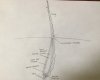
I have been reading more about iontophoresis, though I still have some confusion. It gave me the idea of a system that, instead of having an entry pad for the drug, and an exit pad (cathode or anode), it is just a single path of electricity. It would also involve applying the drug and electricity to the hair only, not the scalp skin. I have no idea if this would actually work or not, which is why I want you all to tell me how this wouldn't work, if it can't. Here is a draft of this idea.

The zig-zag line indicates the drug's path as it is carried by the electricity. This idea presides on the notion that the electricity would follow the perimeter of the hair follicle, though I understand in actuality there are sweat glands and muscles in the way. However, with the right orientation of the electrical path, these obstacles might be avoided.
 

Attachments

  • IMG_7109.JPG
    IMG_7109.JPG
    66.6 KB · Views: 309
Last edited:

Armando Jose

Senior Member
My Regimen
Reaction score
1,016
Iontophoretic apparatus have two membranes, anodic and cathodic, with a costant current between electodes.


Essa EA, Bonner MC, Barry BW. Human skin sandwich for assessing shunt route penetration during passive and iontophoretic drug and liposome delivery. J Pharm Pharmacol. 2002;54:1481–1490.


Possible role of shunt route during

iontophoretic drug penetration

Iontophoresis enhances transdermal drug delivery by three

diferent mechanisms. Firstly, the drug ion-electric field

interaction, in which the electric field imposes a repulsión

force on ions of the same charge, that adds to and often

dominates the diffusion force or concentration gradient.

This additional force then drives the ions through the

membrane more efficiently than in pure diffusion or passive

transdermal drug delivery. Secondarily, the electroosmotic

flow that is the bulk fluid flow that occurs when a voltage

difference is imposed across a charged membrane and is

always in the same direction as the flow of counter ions.

Since human skin is negatively charged above about pH 4,

counter ions are positive ions and electroosmotic flow

occurs from anode to cathode carrying ions or neutral

species with the solvent stream. The main pathway for

electroosmotic flow is through skin appendages and aqueous

pores of the skin. Thirdly, the flow of current may

increase the permeability of the skin by possibly fluidising

the intercellular lipid of the stratum corneum (Pikal 2001).

Therefore, for neutral compounds the predominant mechanism

for their iontophoretic penetration will be the electroosmotic

flow through shunts, with possibly some contribution

from modified skin permeability. For charged

compounds the three mechanisms are encountered, with

the electroosmotic flow either assisting or hindering drug

transport, depending on the charge type.
 

Gone

Established Member
My Regimen
Reaction score
96
Right, I understand, I mean, theoretically, I wonder if the above model would work, with a single path of electricity instead of two. There are things that could go wrong, like the path the electricity takes, the permeability of the drug through the follicle opening, but unless someone proves it couldn't work I think it's worth looking into until that point.
 

Gone

Established Member
My Regimen
Reaction score
96
I see, thank you. Perhaps, even with two electrodes, the electricity could follow a similar path down the hair as I outlined? I guess the next best thing would be to put one electrical pad on the forehead and the other on the back of the head. Additionally, the vehicle could be changed to affect the level of penetration to the veins just below the hair.

I think there has to be some piece to this that could really revolutionize topical treatments.
 
Top