

- Reaction score
- 3
Disclaimer: Individual hair transplant results vary depending on factors such as hair-loss pattern, donor hair quality, genetics, age, scalp characteristics, existing hair density, and adherence to post-operative care. This case study represents one patient's individual experience and does not guarantee identical results for every patient.
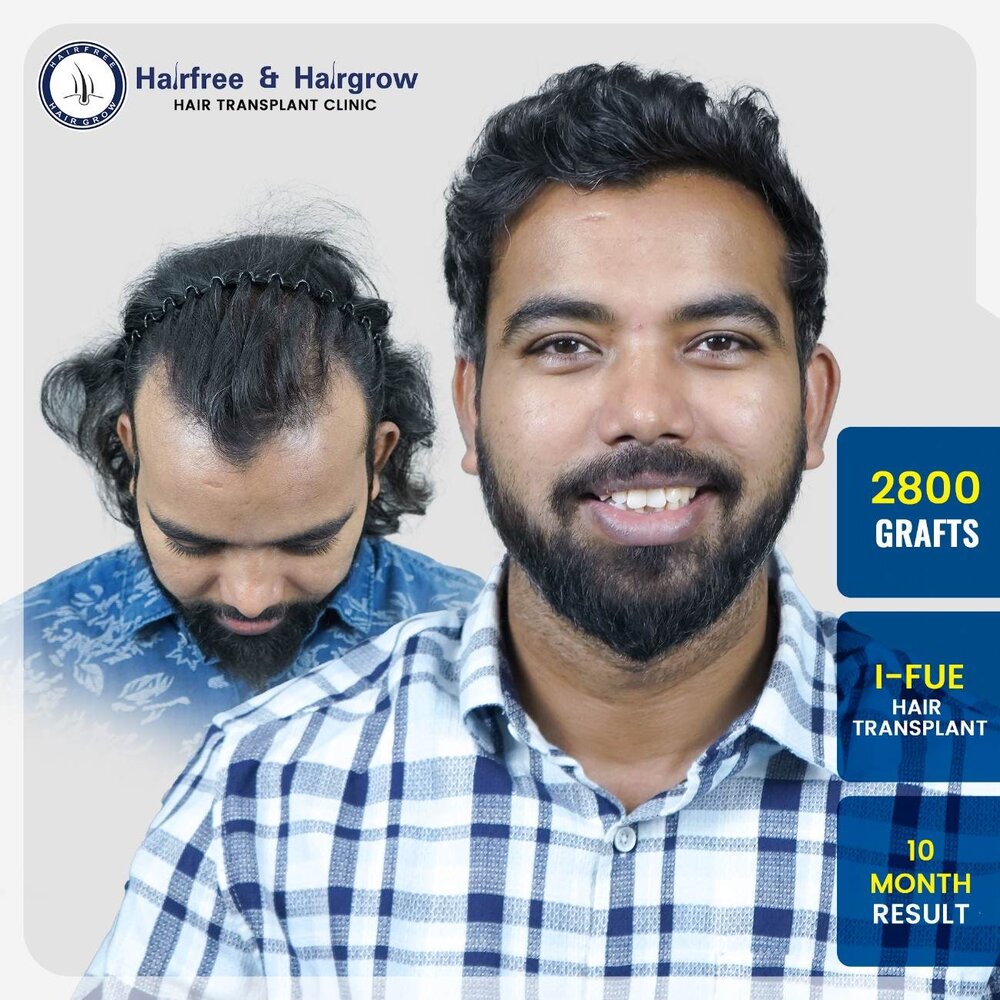
Dadasaheb Tadwalkar underwent a 2,800-graft I-FUE hair transplant to address hair loss and reduced density across the frontal and top scalp.
The treatment was planned according to his individual hair-loss pattern, donor-area availability, recipient-area requirements, and desired aesthetic outcome.
At approximately 10 months after the procedure, the before-and-after photographs show visible improvement in frontal coverage, hair density, hairline definition, and overall scalp coverage.
At this stage, transplanted hair can continue to mature in thickness and appearance.
A detailed assessment of the donor and recipient areas was important for determining how 2,800 grafts could be distributed effectively.
Before Dadasaheb's I-FUE hair transplant, the treatment plan considered factors such as
Hairline design, graft distribution, implantation angle, direction, spacing, and integration with existing hair all contribute to the final appearance.
For Dadasaheb, 2,800 grafts were strategically distributed across the required areas to improve coverage while maintaining a natural-looking transition.
The post-treatment appearance shows:
For Dadasaheb, 2,800 grafts were used as part of an individualized restoration plan rather than relying on graft numbers alone.
This approach helps prioritize:
The before-and-after photographs show improved frontal and top scalp coverage, greater apparent density, reduced scalp visibility, and a fuller overall appearance.
This case highlights the importance of individualized hair-loss assessment, donor-area evaluation, hairline design, graft planning, and strategic follicular-unit placement when planning hair restoration.
For patients researching hair transplant in Pune, choosing a clinic should involve more than comparing graft numbers or treatment prices. Consider the doctor's experience, donor-area assessment, hairline planning, graft strategy, treatment suitability, and approach to long-term hair restoration.
Patients searching for the best hair clinic in Pune should have a personal consultation to determine whether hair transplantation is appropriate for their hair-loss pattern and what outcome may reasonably be expected.
Individual results vary. No specific hair transplant result can be guaranteed.
Patient Details
- Patient Name: Dadasaheb Tadwalkar
- Gender: Male
- Age Group: Adult Male
- Procedure: I-FUE Hair Transplant
- Total Grafts: 2,800 grafts
- Treatment Area: Frontal and top scalp
- Result Timeline: 10 months after hair transplant
- Location: Pune, Maharashtra, India
Patient Overview
Can 2,800 grafts create a natural-looking improvement in hair coverage?Dadasaheb Tadwalkar underwent a 2,800-graft I-FUE hair transplant to address hair loss and reduced density across the frontal and top scalp.
The treatment was planned according to his individual hair-loss pattern, donor-area availability, recipient-area requirements, and desired aesthetic outcome.
At approximately 10 months after the procedure, the before-and-after photographs show visible improvement in frontal coverage, hair density, hairline definition, and overall scalp coverage.
At this stage, transplanted hair can continue to mature in thickness and appearance.
Hair Loss Before the Procedure
Before treatment, Dadasaheb had noticeable thinning and reduced hair coverage across the frontal and top scalp. Increased scalp visibility and a less defined frontal hairline affected the overall appearance of hair density.A detailed assessment of the donor and recipient areas was important for determining how 2,800 grafts could be distributed effectively.
Primary Hair Loss Concerns
- Frontal hair thinning
- Reduced hair density
- Increased scalp visibility
- Reduced top scalp coverage
- Weak or receding frontal hairline
- Reduced overall hair volume
- Difficulty achieving fuller-looking hairstyles
- Desire for improved hair coverage
Donor and Recipient Area Assessment
Successful hair restoration depends on appropriate planning rather than graft numbers alone.Before Dadasaheb's I-FUE hair transplant, the treatment plan considered factors such as
- Donor hair density
- Available donor supply
- Extent and pattern of hair loss
- Follicular-unit characteristics
- Hair shaft thickness
- Existing native hair
- Natural hair-growth direction
- Frontal hairline proportions
- Recipient-area requirements
- Long-term hair restoration goals
Personalized I-FUE Hair Transplant Planning
Dadasaheb's treatment was designed around his individual pattern of hair loss and available donor resources.Treatment Objectives
- Improve frontal hair coverage
- Increase apparent hair density
- Reduce visible scalp
- Improve top scalp coverage
- Create a natural-looking frontal transition
- Follow the direction of existing hair.
- Blend transplanted hair with native hair
- Maintain balanced graft distribution
- Support a natural-looking long-term result
Natural Hairline and Graft Distribution
A natural-looking hair transplant requires more than simply placing a specific number of grafts.Hairline design, graft distribution, implantation angle, direction, spacing, and integration with existing hair all contribute to the final appearance.
For Dadasaheb, 2,800 grafts were strategically distributed across the required areas to improve coverage while maintaining a natural-looking transition.
Key Hairline Planning Factors
- Natural frontal transition
- Appropriate hairline proportions
- Strategic graft distribution
- Natural implantation direction
- Appropriate graft spacing
- Integration with existing hair
- Coverage of thinning areas
- Long-term aesthetic planning
2,800-Graft I-FUE Hair Transplant
Dadasaheb underwent a 2,800-graft I-FUE hair transplant in Pune. Follicular units were extracted from the donor area and strategically implanted into the areas requiring restoration.Treatment Highlights
- 2,800 grafts implanted
- I-FUE hair transplant technique
- Individual follicular-unit extraction
- Frontal and top scalp restoration
- Strategic graft placement
- Natural implantation direction
- Focus on improving hair coverage
- Balanced distribution of available grafts
10-Month Hair Transplant Result
At approximately 10 months after the I-FUE hair transplant, Dadasaheb's before-and-after photographs demonstrate visible improvement in the frontal and top scalp.The post-treatment appearance shows:
- Greater frontal hair coverage
- Improved apparent density
- Reduced scalp visibility
- Better-defined frontal hairline
- Fuller-looking top scalp
- Improved overall hair coverage
- Better integration with existing hair
Hair Transplant Growth Timeline
Week 1
The donor and recipient areas begin the healing process. Temporary redness, swelling, tenderness, and crusting may occur during the early recovery period.Month 1
The scalp continues to heal. Temporary shedding of transplanted hairs may occur during this phase.Months 2 to 3
Some patients experience a period of limited visible growth or temporary shedding as transplanted follicles transition through their natural growth cycle.Months 4 to 6
New transplanted hairs commonly become increasingly visible, and coverage can gradually improve.Months 7 to 9
Hair growth continues to develop, with transplanted hairs potentially becoming thicker and more substantial.Month 10
Dadasaheb's 10-month result shows visible improvement in frontal and top scalp coverage, with increased apparent density and reduced scalp visibility.Months 10 to 12+
Hair can continue to mature in thickness, texture, and overall appearance. The exact timeline varies between individuals.Why Graft Planning Matters in a Hair Transplant
The number of grafts required is different for every patient. A suitable graft plan depends on the extent of hair loss, recipient-area size, donor density, hair characteristics, existing native hair, and long-term restoration goals.For Dadasaheb, 2,800 grafts were used as part of an individualized restoration plan rather than relying on graft numbers alone.
This approach helps prioritize:
- Natural-looking hairline design
- Appropriate graft allocation
- Donor-area preservation
- Recipient-area coverage
- Integration with existing hair
- Long-term aesthetic planning
Final Outcome
Dadasaheb Tadwalkar's 2,800-graft I-FUE hair transplant in Pune demonstrates visible improvement in hair coverage approximately 10 months after treatment.The before-and-after photographs show improved frontal and top scalp coverage, greater apparent density, reduced scalp visibility, and a fuller overall appearance.
This case highlights the importance of individualized hair-loss assessment, donor-area evaluation, hairline design, graft planning, and strategic follicular-unit placement when planning hair restoration.
For patients researching hair transplant in Pune, choosing a clinic should involve more than comparing graft numbers or treatment prices. Consider the doctor's experience, donor-area assessment, hairline planning, graft strategy, treatment suitability, and approach to long-term hair restoration.
Patients searching for the best hair clinic in Pune should have a personal consultation to determine whether hair transplantation is appropriate for their hair-loss pattern and what outcome may reasonably be expected.
Individual results vary. No specific hair transplant result can be guaranteed.