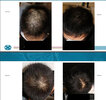
GT20029 is an androgen receptor degrader (AR Degrader). It was developed using a proprietary Proteolysis Targeting Chimera (PROTAC) platform. This is the world's first topical androgen receptor (AR) compound (AR-PROTAC) to enter clinical trials. GT20029 degrades the AR protein via the E3 ubiquitin ligase pathway. https://en.wikipedia.org/wiki/Ubiquitin_ligase#Targeted_protein_degradation
Previously, Kintor announced the top-line results of the phase one clinical trial of GT20029 for the treatment of androgenetic alopecia and acne vulgaris in both China and the U.S., and the phase IIa clinical trial of GT20029 tincture for the treatment of androgenetic alopecia in China.
The phase one clinical trial in China was a randomised, double-blind, placebo-controlled study to evaluate the safety and PK of topical use of GT20029 (gel/tincture). The study enrolled 92 healthy subjects receiving single and multiple ascending dose administration (topical) of GT20029. The results showed that GT20029 demonstrated good safety, tolerability and PK in healthy subjects with limited system exposure. Following a single dose administration, all subjects had no detectable drug concentrations (below LLOQ, 0.001 ng/mL) at all time points. Following 14-day multiple-doses topical administration, the mean maximum drug concentrations of all cohorts were lower than 0.05 ng/mL. All TRAE were grade 1, and no TRAE above grade 1 was reported.
The phase one clinical trial in U.S. was a randomised, double-blind, placebo-controlled, parallel group, dose escalation study to evaluate the safety, tolerability and PK of GT20029 following topical single ascending dose administration (''SAD'') in healthy subjects and multiple ascending dose administration (''MAD'') in subjects with androgenetic alopecia or acne. The study enrolled 123 subjects, and its results showed that GT20029 demonstrated good safety, tolerability and PK following topical SAD administration in healthy subjects and MAD administration in subjects with androgenetic alopecia or acne vulgaris. In the SAD stage, subjects had no systemic exposure at all dose levels, and all sample concentrations were below the LLOQ (0.003 ng/mL). In the MAD stage, after 14 days of continuous administration in subjects with androgenetic alopecia or acne vulgaris, the systemic exposure was limited and the mean maximum observed concentration (Cmax) of all dose levels fluctuated near the LLOQ, with the highest not exceeding 0.015 ng/mL. No TEAE relating to GT20029 was reported in the SAD stage. The most common TEAEs in the MAD stage were mild, including dryness, itching, burning and pain at application sites. No SAE, severe (Grade ≥3) TEAE, and subject withdrawal or death caused by TEAE were reported.
The phase IIa clinical trial of GT20029 tincture for the treatment of androgenetic alopecia in China was a multi-center, randomised, double-blind, placebo-controlled study designed to evaluate the efficacy and safety of GT20029 for treating male androgenetic alopecia, and to determine the recommended dosage for phase III clinical trial. The trial involves a total of 12 clinical research centers in China, and Professor Yang Qinping from Fudan University Huashan Hospital was the leading principal investigator. The trial enrolled 180 male androgenetic alopecia patients, divided into QD and BIW dosing cohorts, each with control groups (dosing placebo) and experiment groups (dosing GT20029 tincture), receiving either 0.5% or 1% doses. The results showed that GT20029 tincture demonstrated statistically significant therapeutic efficacy and clinical significance compared to placebo in both the QD (once a day) and BIW (twice a week) dosing cohorts. After 12 weeks of treatment, the TAHC of 0.5% QD GT20029 group showed an increase of 16.80 hairs/cm2 from baseline, which was 6.69 hairs/cm2 more than the placebo group, with statistically significant results. The TAHC of GT20029 1.0% BIW group showed an increase of 11.94 hairs/cm2 from baseline, which was 7.36 hairs/cm2 more than the placebo, also yielding statistically significant results. For the BIW cohort, the study indicated a dose-response relationship among different doses of GT20029. Regarding safety, GT20029 tincture demonstrated good safety and tolerability, with the incidence of adverse events during treatment comparable to that of the placebo group. In addition, no adverse sexual events were observed during the trial.
Previously, Kintor announced the top-line results of the phase one clinical trial of GT20029 for the treatment of androgenetic alopecia and acne vulgaris in both China and the U.S., and the phase IIa clinical trial of GT20029 tincture for the treatment of androgenetic alopecia in China.
The phase one clinical trial in China was a randomised, double-blind, placebo-controlled study to evaluate the safety and PK of topical use of GT20029 (gel/tincture). The study enrolled 92 healthy subjects receiving single and multiple ascending dose administration (topical) of GT20029. The results showed that GT20029 demonstrated good safety, tolerability and PK in healthy subjects with limited system exposure. Following a single dose administration, all subjects had no detectable drug concentrations (below LLOQ, 0.001 ng/mL) at all time points. Following 14-day multiple-doses topical administration, the mean maximum drug concentrations of all cohorts were lower than 0.05 ng/mL. All TRAE were grade 1, and no TRAE above grade 1 was reported.
The phase one clinical trial in U.S. was a randomised, double-blind, placebo-controlled, parallel group, dose escalation study to evaluate the safety, tolerability and PK of GT20029 following topical single ascending dose administration (''SAD'') in healthy subjects and multiple ascending dose administration (''MAD'') in subjects with androgenetic alopecia or acne. The study enrolled 123 subjects, and its results showed that GT20029 demonstrated good safety, tolerability and PK following topical SAD administration in healthy subjects and MAD administration in subjects with androgenetic alopecia or acne vulgaris. In the SAD stage, subjects had no systemic exposure at all dose levels, and all sample concentrations were below the LLOQ (0.003 ng/mL). In the MAD stage, after 14 days of continuous administration in subjects with androgenetic alopecia or acne vulgaris, the systemic exposure was limited and the mean maximum observed concentration (Cmax) of all dose levels fluctuated near the LLOQ, with the highest not exceeding 0.015 ng/mL. No TEAE relating to GT20029 was reported in the SAD stage. The most common TEAEs in the MAD stage were mild, including dryness, itching, burning and pain at application sites. No SAE, severe (Grade ≥3) TEAE, and subject withdrawal or death caused by TEAE were reported.
The phase IIa clinical trial of GT20029 tincture for the treatment of androgenetic alopecia in China was a multi-center, randomised, double-blind, placebo-controlled study designed to evaluate the efficacy and safety of GT20029 for treating male androgenetic alopecia, and to determine the recommended dosage for phase III clinical trial. The trial involves a total of 12 clinical research centers in China, and Professor Yang Qinping from Fudan University Huashan Hospital was the leading principal investigator. The trial enrolled 180 male androgenetic alopecia patients, divided into QD and BIW dosing cohorts, each with control groups (dosing placebo) and experiment groups (dosing GT20029 tincture), receiving either 0.5% or 1% doses. The results showed that GT20029 tincture demonstrated statistically significant therapeutic efficacy and clinical significance compared to placebo in both the QD (once a day) and BIW (twice a week) dosing cohorts. After 12 weeks of treatment, the TAHC of 0.5% QD GT20029 group showed an increase of 16.80 hairs/cm2 from baseline, which was 6.69 hairs/cm2 more than the placebo group, with statistically significant results. The TAHC of GT20029 1.0% BIW group showed an increase of 11.94 hairs/cm2 from baseline, which was 7.36 hairs/cm2 more than the placebo, also yielding statistically significant results. For the BIW cohort, the study indicated a dose-response relationship among different doses of GT20029. Regarding safety, GT20029 tincture demonstrated good safety and tolerability, with the incidence of adverse events during treatment comparable to that of the placebo group. In addition, no adverse sexual events were observed during the trial.
Last edited: