
- Reaction score
- 96
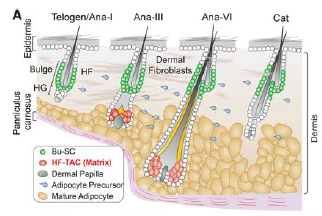
I was reading in a different thread that kerastem is meant to increase scalp thickness. However it seems the consensus is that kerastem doesn't regrow hair. The question is then, does kerastem fail to regrow hair because it doesn't thicken the scalp? Or is its success in thickening the scalp not relevant to hair growth.
Transplanted hairs are not quite as thick as normally growing DHT unaffected hairs, but the figure is like 97% thickness or something like that.
http://drcarloswesley.com/T/06082014.pdf
Anyway, we know that transplanted hairs can grow in areas of thinned scalp. Maybe this means that the scalp thinning is responsible for the 3% decrease, or simply isn't relevant at all.
But is there any causal link between scalp dermis/fat thickness and hair loss?
This article seems really biased and didn't dismiss the counterarguments to this point, but I learned from it that testosterone decreases subcutaneous fat, which might explain the fat thinning in bald scalp, however the dermal thinning remains unexplained. https://www.ncbi.nlm.nih.gov/pmc/articles/PMC4174066/#!po=45.0000
Transplanted hairs are not quite as thick as normally growing DHT unaffected hairs, but the figure is like 97% thickness or something like that.
http://drcarloswesley.com/T/06082014.pdf
Anyway, we know that transplanted hairs can grow in areas of thinned scalp. Maybe this means that the scalp thinning is responsible for the 3% decrease, or simply isn't relevant at all.
But is there any causal link between scalp dermis/fat thickness and hair loss?
This article seems really biased and didn't dismiss the counterarguments to this point, but I learned from it that testosterone decreases subcutaneous fat, which might explain the fat thinning in bald scalp, however the dermal thinning remains unexplained. https://www.ncbi.nlm.nih.gov/pmc/articles/PMC4174066/#!po=45.0000
Last edited: